




Key Takeaways
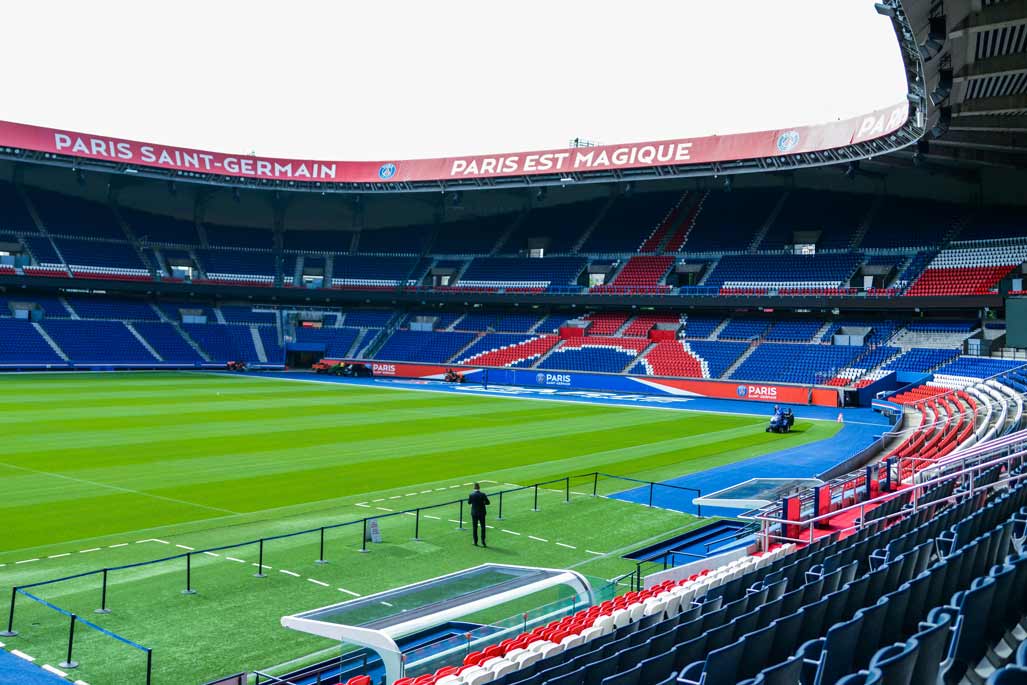
- Built in 1897, the Parc des Princes is a Parisian sports heritage site that has hosted multiple clubs and the French national team, far beyond PSG’s history.
- The stadium is structurally limited and cannot compete with a modern complex; Paris has every reason to keep it and let PSG build elsewhere.
- Keeping the Parc allows the city to preserve a strategic asset, host other clubs or events, and plan for the future of Parisian football.
Sommaire
For several years, Paris Saint-Germain has been increasing pressure to buy the Parc des Princes and is now in open conflict with the City of Paris, the stadium’s owner.
PSG’s position is clear: without purchasing the Parc, any stadium expansion becomes impossible, which the club claims would compromise its long-term economic model. Consequently, PSG is ready to move on and build a new stadium outside Paris, notably in Poissy or Massy.
Behind a narrative mixing historical attachment and economic necessity, the Parisian club is attempting to impose the idea that it would be natural for the City of Paris to cede its stadium. Yet, on closer examination, Paris objectively has no reason to sell the Parc to PSG—neither from a sporting, economic, nor symbolic perspective.
The Parc des Princes: long before PSG, other Parisian clubs played here
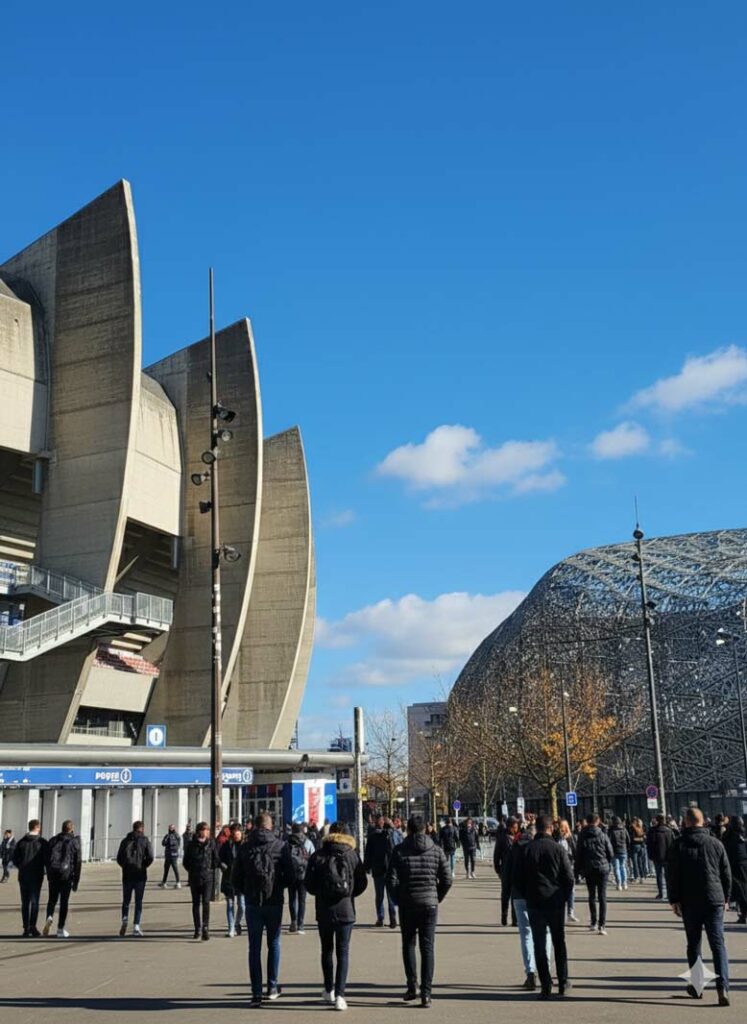
Contrary to a common misconception, the Parc des Princes is not defined solely by PSG’s history. Built in 1897, the stadium already existed for more than seventy years when PSG was founded in 1970. Originally, the stadium was not even dedicated to football: it was a velodrome, hosting legendary Tour de France finishes and even matches of the French rugby team.
Long before PSG became its emblematic resident, the Parc des Princes saw several major French sports clubs play there. Stade Français played there from 1945 to 1968, while Racing Club de France held its matches from 1932 to 1966, returning later for a few seasons. Both clubs wrote important chapters of their history at the Parc.
The stadium underwent a major renovation in 1972, giving it its current appearance. In the following years, Paris FC played there from 1972 to 1974, and Racing Club de France (as Racing Matra) from 1984 to 1990. During this period, Racing shared the stadium with PSG, which, newly founded, began to settle there permanently from 1974.
Even though PSG is now inseparable from the Parc des Princes, the reverse is far from true. Selling it to PSG would mean privatizing a century-old sports heritage, designed for the collective interest, for the benefit of a single actor—a decision with significant consequences for both Paris and French sport.
A stadium as a tool of geopolitical influence?
At a time when sport has become a lever of international influence, the question of stadium ownership goes beyond football. PSG belongs to the Qatari sovereign wealth fund, a state that uses sport as an instrument of soft power. Transferring the Parc des Princes to an entity directly linked to a foreign country raises serious political and symbolic issues.
A stadium in the heart of the capital, owned by a public authority, is a strategic tool. Keeping control allows the City of Paris to manage its use, image, and influence. Selling it would mean giving up a degree of symbolic sovereignty in a context where sport and diplomacy are more intertwined than ever.
PSG’s bid for the Parc: a façade?
Since negotiations began, PSG has maintained a communication stance aimed mostly at protecting itself. In reality, this position is merely a pretext to shift the blame onto the City, which does not wish to sell the Parc, while avoiding alienating its own supporters, who are strongly attached to the stadium. The proposed offer—around €30 million—appears trivial compared to the property, historical, and strategic value of the stadium, especially given the club’s virtually unlimited financial resources from its Qatari owners.
Moreover, PSG knows full well that the Parc cannot meet its long-term economic ambitions. Unlike modern stadiums such as Tottenham’s, a highly profitable complex integrating hotels, shops, offices, and event spaces, the Parc is structurally limited. Its capacity will remain capped at 60,000 seats at most—and even that figure is reportedly difficult to achieve—due to its location and the surrounding road infrastructure. No renovation project could rival a stadium built from scratch, designed from the outset as an economic engine.
In reality, PSG would be far better off building a modern stadium and complex elsewhere, far more profitable than the Parc, whose potential is definitively limited.
Paris needs stadiums, not to lose them
For Parisian and French football, it would be healthier for PSG to build a new stadium. This would allow Paris to retain a strategic venue for other sporting or cultural uses. The capital suffers from a severe shortage of large stadiums. Even though PSG’s contract with the City to occupy the Parc runs until 2044, the situation could change. Could Paris FC eventually occupy the stadium? That remains another story…
In the long term—even in twenty years—a potential departure of PSG would free up a precious space in the heart of a city lacking major sports infrastructure. The Parc could then host other clubs, the French national team, international competitions, or major events.
Keeping the Parc: a choice of vision
Selling the Parc des Princes would be a short-sighted decision. Keeping it preserves a public heritage, maintains a strategic asset, and offers Parisian football a more balanced vision. PSG can build its future elsewhere without the Parc. Paris, however, cannot afford to give it up: the stadium remains a strategic heritage and a lever for the future of football and sport in the city.
Johann Macq
Web writer passionate about football and history, I have specialized for several years in clubs from Paris and the Île-de-France region. I cover both the most well-known teams and those with a more understated prestige, sharing stories, anecdotes, and insights with fellow football enthusiasts.