


Key points
- Founded in 1970, PSG quickly won its first national trophies in the 1980s.
- In the 1990s, the club made a name for itself in Europe, winning the Cup Winners’ Cup in 1996.
- The arrival of Qatari investors in 2011 transformed PSG, providing exceptional financial means and attracting international stars.
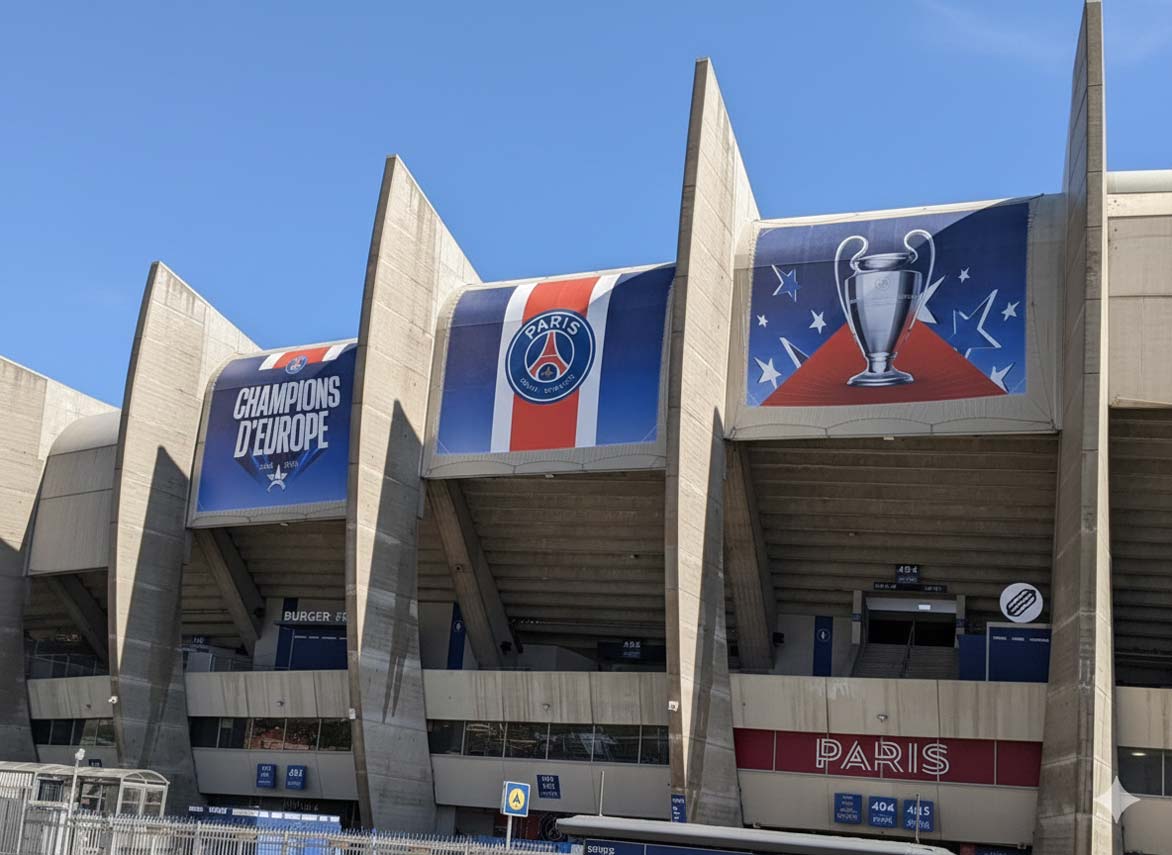
- Despite domestic dominance, the club faced several European failures before winning the Champions League in 2025 (5-0 against Inter).
- This triumph solidified PSG’s global image and established the Qatari era as a central chapter in its history, built on over 40 years of achievements.
Sommaire
Paris Saint-Germain has never had a smooth path. Since its creation, the capital’s club has navigated numerous internal crises and sporting disappointments.
The arrival of Qatari investors marked a radical turning point, transforming Paris into a global financial powerhouse and a symbol of a divisive football model. While this shift allowed PSG to reach a new dimension, it also created a gap with part of its fan base, ranging from disillusionment to a perceived loss of identity among the long-time supporters.
For a long time, this new era was not enough to mask repeated European failures. Flashy but inconsistent signings, and sometimes humiliations (notably against FC Barcelona), marked Paris’s journey.
Before finally lifting the Champions League in 2025 after a resounding final victory (5-0 against Inter Milan), PSG had to endure years of obstacles, learn from its mistakes, and rebuild through hardship, turning its scars into strength.
Birth of a Club in 1970
Paris Saint-Germain took shape in August 1970, thanks to the merger of Paris FC and Stade Saint-Germain.
Originally, the creation of a major football club in Paris was primarily a political initiative. Following a referendum organized by the French Football Federation (FFF) in 1969, 60,000 Parisians chose the name Paris FC to embody the project. Problem: the club then had neither structure, facilities, nor a team. For nearly a year, Paris FC existed only on paper.
The solution came through a merger with Stade Saint-Germain, freshly promoted to the second division. Thus, in 1970, Paris Saint-Germain Football Club was born, quickly climbing the ranks to the first division. The ambition was clear: to provide the capital with a club capable of competing at the highest national and then European levels.
But once again, politics and sport were intertwined. In the spring of 1972, the Paris city hall conditioned an 80 million franc subsidy on dropping the name “Saint-Germain,” considered too “suburban.” On May 16, 1972, the split was finalized: Paris FC retained its place in Ligue 1, while Paris Saint-Germain, now independent again, restarted in the third division.
Ironically, the trajectories reversed quickly. In 1974, PFC was relegated to Ligue 2 while PSG returned to the top flight. The two clubs would meet in the first division only sporadically (in 78/79) until a new derby nearly 40 years later, played in the 2025/2026 season.
1982–1986 – First National Successes: PSG wins its first Coupe de France in 1982, followed by its first French championship title in 1986.
The 1980s opened the door to Paris Saint-Germain’s first trophies. The team won its first Coupe de France in 1982 against Michel Platini’s Saint-Étienne.
This triumph was followed by a second Coupe de France victory in 1983, confirming PSG’s rapid rise. The pinnacle of this period was the 1986 French championship, the first in the club’s history, which firmly established the team in French football.
1990s – The European Era
Thanks to new investments from Canal+, the team built a strong reputation in Europe, notably winning the Cup Winners’ Cup in 1996 against Rapid Vienna. This era produced iconic players: Raí, Djorkaeff, Loko, Daniel Bravo…
The Arrival of Qatar
After its European Cup win, PSG went through a period marked by repeated changes in ownership and fluctuating sporting strategies. The transition to Colony Capital exemplified this delicate phase, with disappointing results and limited ambition.
The arrival of Qatari investors in 2011 opened a new era, radically transforming PSG’s financial resources, sporting ambitions, and status on the European stage.
Numerous Ligue 1 Successes…
With the Qatari investors and their high-profile transfers, PSG quickly dominated the French league.
The team won multiple championship titles, establishing itself as the undisputed Ligue 1 reference (ongoing record): 2013, 2014, 2015, 2016, 2018, 2019, 2020, 2022, 2023, 2024, and 2025.
This domestic dominance was accompanied by victories in the Coupe de France and Coupe de la Ligue, allowing Paris Saint-Germain to collect numerous domestic trophies. The squad, strengthened by global stars, made PSG a true winning machine in France: Ibrahimovic, Messi, Beckham, Neymar, Mbappé…
But Many European Failures
Despite national hegemony, the Champions League remained a major obstacle for PSG. The team suffered several high-profile failures against European giants, notably the “remontada” against FC Barcelona.
These repeated disappointments created growing frustration among fans and observers. PSG seemed to hit a European glass ceiling, unable to realize its continental ambitions despite enormous investments.
Champions League Triumph in 2025: PSG’s Decisive Turning Point
The long-awaited Champions League victory marked a historic turning point in Paris Saint-Germain’s history. This triumph finally broke the European curse that had weighed on the club.
Luis Enrique’s team’s path to European glory was marked by a series of high-level performances. Against formidable opponents, sometimes decided by penalties like against Liverpool, PSG displayed new maturity and mental strength long absent in its European history.
On May 31, 2025, Paris Saint-Germain crushed Inter Milan 5-0, recording the largest victory ever in a Champions League final and cementing its place in the competition’s history.
The Impact of This Triumph on the Team’s Identity and Future
This Champions League victory profoundly transformed PSG’s global image. The club gained credibility and respect, turning the page on the mockery that had accompanied its European history under Qatari leadership.
Conclusion: PSG, a Giant of World Football?
From its creation in 1970 to European glory in 2025, Paris Saint-Germain’s journey has never been smooth. This Champions League victory represents the culmination of a long-term project and the realization of a collective dream carried by a city, a club, and a country, Qatar.
One question remains: is this first triumph the prelude to more success, or even lasting dominance on the global stage?
Frequently Asked Questions
How many European cups has PSG won?
Paris Saint-Germain has won two major European cups in its history. The first was the Cup Winners’ Cup in 1996, marking PSG’s first continental title. More recently, in 2025, the Champions League victory rewarded years of investment and hard work by the Qatari owners to elevate the club to the top of Europe.
Who is PSG’s biggest legend?
Several players have left a mark on PSG’s history, some standing out for their talent and influence. Club legends include Ronaldinho, Daniel Bravo, Kylian Mbappé, Zlatan Ibrahimovic, Edinson Cavani, George Weah, Bernard Lama, Pauleta, and Mustapha Dahleb. From heroes of the 1980s–1990s to stars of the Qatari era, each generation has helped shape PSG’s identity and legend.
Is it true that PSG’s history really began with Qatar’s arrival?
Long before the Qatari investors arrived, Paris Saint-Germain had already made its mark in French football, winning several trophies and experiencing its first glories in the 1980s and 1990s. The Qatari era was a true turning point: it significantly strengthened the club’s resources, attracted international stars, and enabled the conquest of its first Champions League in 2025. While PSG’s history was already rich before 2011, this period was decisive in transforming the club into a European giant and propelling it to unprecedented heights.
Which stadium does PSG play in?
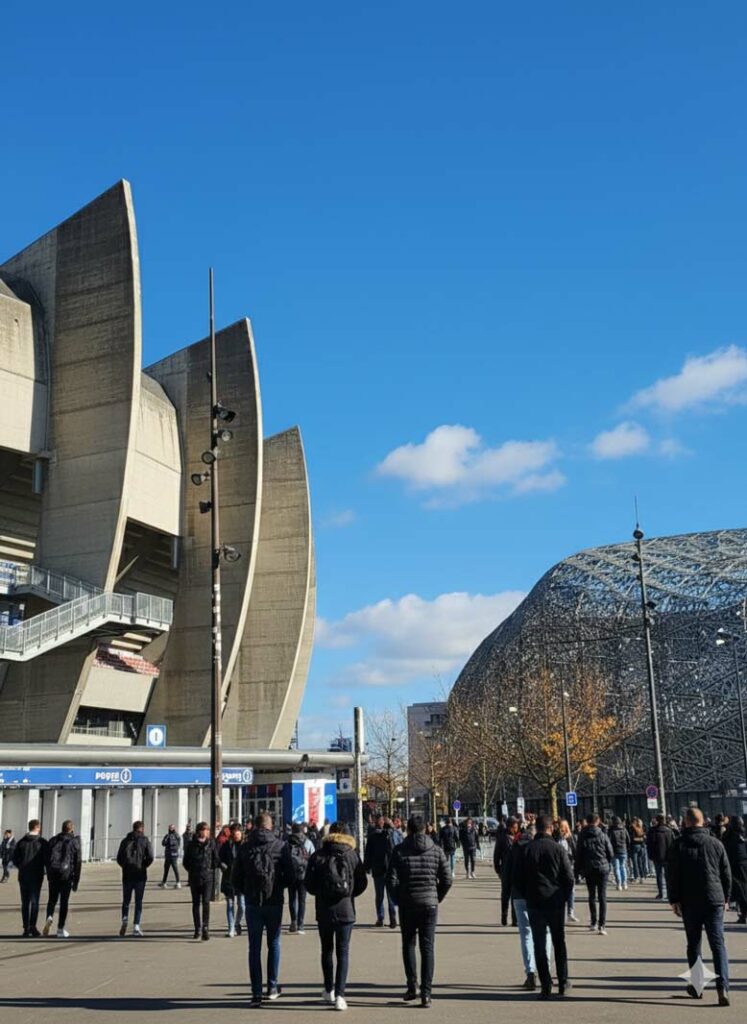
Paris Saint-Germain has played at the Parc des Princes since 1974, its iconic stadium located in Paris’s 16th arrondissement. This legendary venue, with a capacity of 47,929, is the true temple of Parisian football. Parc des Princes has witnessed all of PSG’s major moments, from early successes to recent triumphs. Plans for a new stadium in Île-de-France are under consideration due to disputes with the City of Paris.
Is PSG looking for a new stadium?
Yes. The club is currently exploring the construction of a new stadium in Île-de-France for two reasons: the City of Paris has so far refused to sell the Parc des Princes. Two sites are under study: Poissy and Massy, and PSG is also consulting its supporters. The goal is to have a modern, larger stadium capable of hosting 60,000 spectators or more, meeting European standards.

Johann Macq
Web writer passionate about football and history, I have specialized for several years in clubs from Paris and the Île-de-France region. I cover both the most well-known teams and those with a more understated prestige, sharing stories, anecdotes, and insights with fellow football enthusiasts.