



Key Points
A Strong Historical Heritage: Founded in 1897 by Jules Rimet, Red Star FC is a legendary club, multiple-time winner of the Coupe de France, deeply rooted in the popular history of Paris.
Decades of Struggle: After its golden years, the club went through a long decline marked by financial and sporting difficulties.
A Modern Renaissance: Since 2009, Patrice Haddad has revitalized Red Star by modernizing its image while preserving its popular and cultural DNA.
Crucial Infrastructure: The renovation of Stade Bauer and the Marville training center are shaping the club’s future.
Elite Ambitions: Now stable and ambitious, Red Star FC aims to return to Ligue 1 without compromising its identity.
Table of Contents
Red Star FC: A Unique Heritage in French Football
Red Star FC is far more than just a football club. This Parisian institution (or more accurately, from the Paris region, as it is based in Saint-Ouen) was founded in 1897 under the leadership of Jules Rimet and has etched its name into the imagination of French football. Now on the verge of promotion to Ligue 1, this legendary club is experiencing a spectacular revival after decades of struggle.
From its Coupe de France victory in 1921 to more recent survival battles, here is the story of a club that refuses to fade away.
The Glorious Origins of a Legendary Club
Jules Rimet founded Red Star Club Français in 1897. The Red Star quickly rose to prominence, winning the Coupe de France in 1921, 1922, 1923, 1928, and 1942. These victories were more than statistics—they reflected a time when the red-and-green club dominated French football.
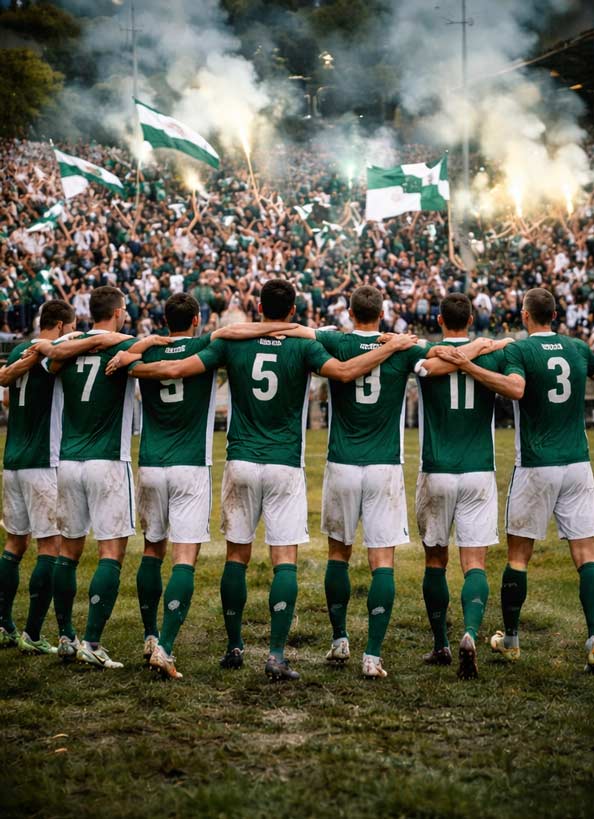
Every match was an event: the attendance record at Stade Bauer—23,000 spectators against Sochaux—dates back to 1935. Red Star FC, a club of workers and the Parisian working class, symbolized an era when football still had deep social roots.
A Long Desert Crossing
Then came the decline. Financial troubles mounted, Stade Bauer aged, and the club’s image tarnished.
Accustomed to top-tier luxury, Red Star FC suddenly confronted the realities of the lower divisions from 1946 onward. This fall was not accidental; it reflected the club’s difficulty in adapting to modern football.
For decades, the Red Star survived quietly, far from the limelight of Ligue 1.
The Renaissance Under Patrice Haddad: Modernity, Culture, and a New Identity
Since 2009, president Patrice Haddad has orchestrated a true revival. Red Star FC has regained its youthful energy while retaining the popular Saint-Ouen DNA that defines it. The dusty image that clung to the club for decades has been replaced by a fresh, modern identity that resonates with contemporary urban culture.
The Red Star Lab (Source in French) exemplifies this new approach: sport, art, and civic engagement combine in an innovative mix. Red Star is the only club with an artistic director, a rare initiative in football. The Lab allows young players to explore creative projects blending sport, culture, and design.
This hip, forward-thinking approach has attracted a new generation of supporters, particularly in Paris, where Red Star is reclaiming its place on the map of trendy football. The arrival of American investment, despite the turbulence around 777 Partners, has provided the financial resources to sustain this transformation.
Infrastructure upgrades are multiplying. Stade Bauer will soon be renovated to match the club’s renewed ambitions, while the Marville training center, built from scratch, has become a cornerstone of the long-term sporting project.
These investments mark a decisive turning point: the club’s historical weaknesses are being addressed, paving the way for Red Star FC’s return to French football’s elite.

Ambitions and Structure: Red Star Ready for the French Football Elite?
Red Star FC now eyes the French football elite with a structured, long-term strategy. Backed by American investment that stabilized its finances, the club is laying solid foundations. Like Paris FC, it focuses on local talent development, drawing from the Saint-Denis area, while relying on Stade Bauer and the Marville training center as the backbone for sporting performance.
The ultimate goal? Returning to Ligue 1 and contesting that legendary derby against PSG—an iconic showdown between a historic, community-rooted club and Paris’ financial powerhouse.
Yet this revival is about more than results. Red Star FC is cultivating a unique identity, deep social roots, and an urban culture that stands out in French football. Every player, supporter, and staff member contributes to this collective rebirth.
Key Takeaways: Red Star FC, a Unique Club
Founded by Jules Rimet and marked by multiple Coupe de France victories, Red Star FC experienced glory before a long period of obscurity.
Under Patrice Haddad’s visionary leadership, Red Star is enjoying a genuine renaissance. Stade Bauer is being renovated, the Marville training center developed, and the club now possesses the resources to aim for a return to France’s football elite.
Despite American ownership, Red Star retains its popular, engaged soul. The club proves that honoring heritage, paired with a modern vision, can create something truly unique in French football.
Frequently Asked Questions
Why is Red Star’s jersey green?
The color comes from Olympique de Pantin. In the 1910s–1920s, both clubs were among the most important in Paris. Olympique wore green from 1918–1919 (a color inherited from SC Vaugirard), while Red Star initially played in navy and white stripes. On April 26, 1926, the clubs merged, creating Red Star Olympique with the green jersey, a name kept until 1967 before reverting to Red Star FC.
Is Red Star a communist club?
No. Red Star FC was never a communist club. Its name, chosen by Jules Rimet in 1897, comes from a ship. Though its working-class roots and Saint-Ouen ties give it a left-leaning image, Red Star remains committed to anti-racism, tolerance, and community engagement, without official political affiliation.
Why is a Red Star stand named after Rino Della Negra?
The Rino Della Negra stand at Stade Bauer honors a legendary player and French Resistance hero. The son of Italian immigrants, Rino joined Red Star in 1942 while clandestinely serving in the FTP-MOI. Executed by the Nazis at 20, his courage is commemorated annually; the main stand bears his name, and a plaque was installed in 2004.
Why doesn’t Red Star play at the Stade de France?
Although near Saint-Ouen, Stade de France is too large and costly for Red Star’s attendance and model. The club chose to renovate Stade Bauer instead, preserving its identity and fanbase. Occasional use of Stade de France remains possible, particularly for a derby against PSG, as noted by president Patrice Haddad.