




Key takeaways
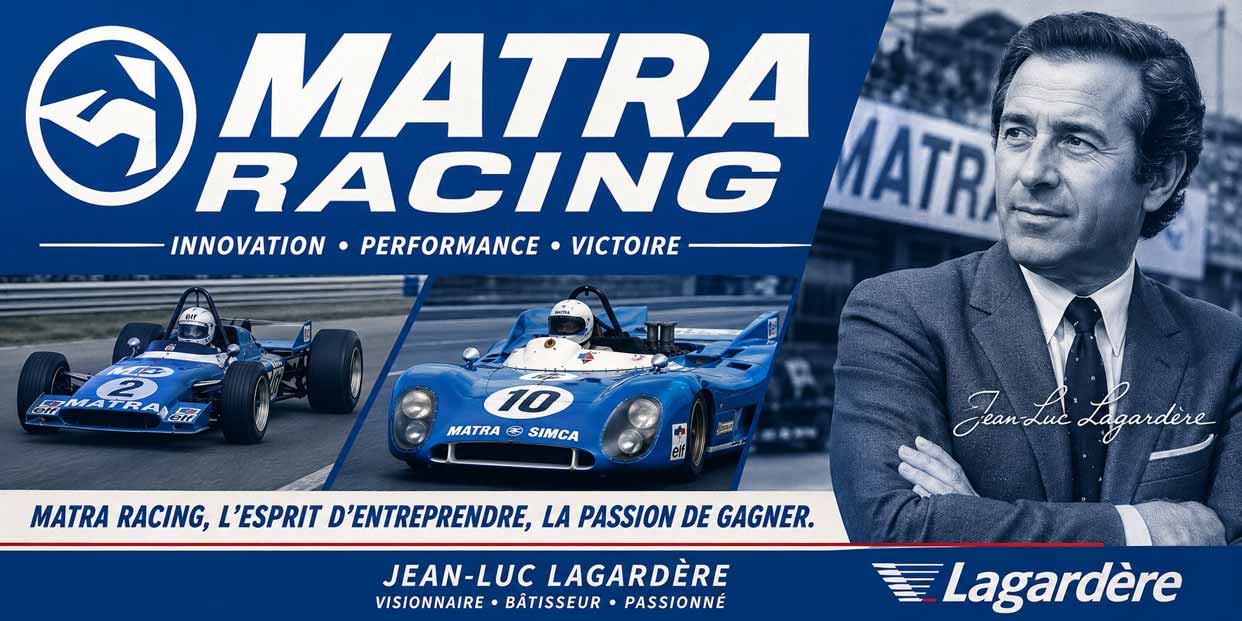
The Matra Racing project (1982–1989) was one of the first attempts at football business in France, with massive investments from Jean-Luc Lagardère to create a Paris-based team capable of competing with Europe’s top clubs.
Despite signing international stars such as Enzo Francescoli, Pierre Littbarski, and Luis Fernández with record salaries for the time, the club never achieved the expected sporting success.
Matra Racing’s failure is explained by the lack of popular roots, chronic instability, and significant financial deficits.
Paradoxically, the project modernized French football by introducing concepts that are now standard, such as sports marketing and a more professional approach to players’ status.
Table of contents
In the 1980s, French football was about to undergo a revolution orchestrated by Jean-Luc Lagardère. This visionary industrial leader, already a key figure in Formula 1 with his Matra group (Mécanique Aviation Traction), bought the Racing Club de France in 1982, then in decline. His goal? To build, within five years, a club capable of challenging European giants such as Juventus or Real Madrid.
The project combined Matra’s high technology with sporting excellence. Lagardère wanted to create Paris’s second major team alongside PSG.
Matra Racing tried to force destiny through millions of francs. But wanting to move faster than the game itself exposed the club to a brutal downfall: the project burned out before it ever found its balance.
The Matra Racing project: between colossal investment and disappointed hopes
In 1982, Jean-Luc Lagardère aimed to create a second major club in Paris alongside PSG through his Lagardère Group.
He initially envisioned a merger between the Racing Club de France Football, then struggling, and Paris FC, but Racing refused due to a lack of financial guarantees regarding PFC.
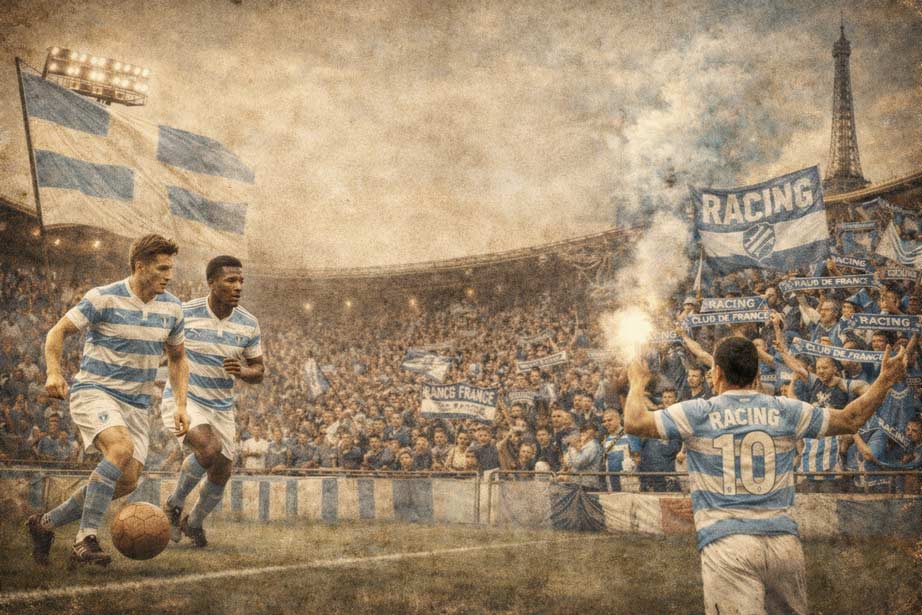
Lagardère then acquired Paris FC alone, heavily in debt, and renamed it Racing Paris 1. He gave it the light blue and white colors of Racing to prepare for a future merger.
An agreement was reached: if RP1 stayed in Division 2, a merger with Racing could take place. The sporting objective was achieved, and the merger was activated.
The RP1 first team in Division 2 was integrated into Racing Club de France, while the reserve and youth teams were sent back under the name Paris FC 83, in the fourth division.
With new financial resources, the “sky and whites” were promoted to the first division in 1984.
Emblematic transfers and squad building
Jean-Luc Lagardère disrupted the French football economy. Between 1984 and 1988, the club attracted global stars with salaries that shattered market standards, aiming to assemble a true “Dream Team.”
Key signings of the Lagardère era:
| Player | Nationality | Origin | Year of arrival | Status / Honors |
|---|---|---|---|---|
| Maxime Bossis | French | FC Nantes | 1985 | International |
| Pierre Littbarski | German | FC Cologne | 1986 | Germany national team star |
| Luis Fernandez | French | PSG | 1986 | Parc des Princes idol, 1984 European champion |
| Enzo Francescoli | Uruguayan | River Plate | 1986 | “The Prince,” South American star |
| Rabah Madjer | Algerian | FC Porto | 1988 | Author of the legendary backheel goal |
Luis Fernández’s arrival in 1986, pried away from PSG for nearly 6 million francs, caused a shockwave. With Artur Jorge, the Portuguese coach and European champion, the squad seemed ready to dominate Division 1 and shine in Europe.
The quest for sporting success
Racing Paris then changed its name to Matra Racing, despite regulations that in principle prohibited adding a commercial brand to a club’s name. Matra, a brand of the Lagardère industrial group, thus became part of the club’s identity. The association of a sponsor’s name with a team was unprecedented.
The project aimed to fuel a rivalry with Paris Saint-Germain, with both clubs now sharing the Parc des Princes. Lagardère envisioned a boiling Parc des Princes for a major Paris derby. However, the chemistry took time to develop despite the star-studded squad. Sporting performances did not meet expectations, and the stadium remained far from full.
Results during the Matra Racing era:
- 1986–1987 season: a dull 13th place despite the stars.
- 1987–1988 season: 7th place, far from European ambitions.
- 1988–1989 season: the club narrowly avoids relegation from Division 1.
Challenges and first cracks in the project
The project ran into a lack of popular support. This race against time gave the impression of an artificial construction, a team of mercenaries without real soul.
The multiple name changes (Racing Paris 1, Matra Racing) and the move from the historic Stade Yves-du-Manoir (in Colombes, in the suburbs of Paris) to the Parc des Princes deeply blurred the club’s identity.
In addition, the economic model became unstable. Revenue remained derisory compared to the wage bill. The club survived thanks to injections from the Matra group, creating a financial black hole with no tangible return on investment.
Pressure intensified to the point that every poor result was seen as a crisis. The club was increasingly criticized by the media and struggled to win public support. This heavy atmosphere eventually affected both the players and its owner, Jean-Luc Lagardère.
The resounding failure and paradoxical legacy for French football
The adventure ended with Lagardère’s abrupt withdrawal in 1989 after investing 300 million francs at a loss. Without financial backing, the club returned to the name “Racing Paris 1” and had to sell its key players to stabilize its finances.
Deprived of resources, Racing Paris 1 was relegated to the second division, despite a strong run in the French Cup, which ended in the final, lost to Montpellier (2–1).
The “sky and whites” would never again return to the top flight of French football.
The lasting impact on the football business landscape
Paradoxically, this failure paved the way for modernization. Lagardère introduced now-essential concepts: sports marketing, VIP boxes, and merchandising.
The impact on the transfer market became irreversible. This wage inflation forced rivals such as Tapie’s Marseille and PSG to adapt in order to remain competitive, further professionalizing players’ status.
This episode left a lasting lesson: money alone guarantees nothing. The later success of PSG under QSI shows that financial power must be combined with structure and sporting identity.
Conclusion: Matra Racing, an audacious gamble with timeless lessons
Matra Racing remains a unique chapter in French football: an oversized project, designed to go fast and high, but caught by the realities of the game.
By attempting to build a major European club almost from scratch, Jean-Luc Lagardère demonstrated the limits of ambition when it is not converted into lasting sporting success.
It remains a unique experience, as fascinating for its boldness as for the lessons it reveals.
Frequently asked questions
What is the history of Matra Racing?
The history of Matra Racing tells the story of a spectacular attempt to create a major Parisian club in the 1980s. In 1982, Jean-Luc Lagardère, head of the Matra group, bought the Racing Club de France. The club became Matra Racing in 1987 to reflect its owner’s identity.
The club received massive investment and signed stars such as Enzo Francescoli, Pierre Littbarski, Luis Fernández, and Maxime Bossis. The goal was to compete with PSG and win trophies. However, the chemistry never worked: results disappointed and the public did not identify with a team perceived as artificial. In 1989, facing a 300-million-franc deficit and a lack of success, Lagardère withdrew. The club collapsed financially and was relegated to the second division, marking the end of an era of grand ambition.
Who was the president of Matra Racing?
The emblematic president was Jean-Luc Lagardère. An industrialist leading the Matra group (aeronautics, defense, automotive), he managed the club like a business, seeing football as a communication tool. His overwhelming ambition led him to invest astronomical sums to accelerate the club’s development. Although his project was a sporting and financial failure, Jean-Luc Lagardère remains a major figure in sports business, having anticipated the rise of modern investors.
Johann Macq
Web writer passionate about football and history, I have specialized for several years in clubs from Paris and the Île-de-France region. I cover both the most well-known teams and those with a more understated prestige, sharing stories, anecdotes, and insights with fellow football enthusiasts.